Ankle arthritis can make every step uncomfortable. Unlike temporary ankle pain after a minor strain, advanced joint deterioration may cause persistent pain, stiffness, swelling, and progressive difficulty with walking. When conservative treatment becomes insufficient, Total Ankle Replacement may be one of the surgical options evaluated in selected patients.
For people around Santacruz, Khar and Bandra, Mumbai, understanding candidacy is particularly important because ankle replacement is not appropriate for every form of ankle pain or arthritis.
What is total ankle replacement?
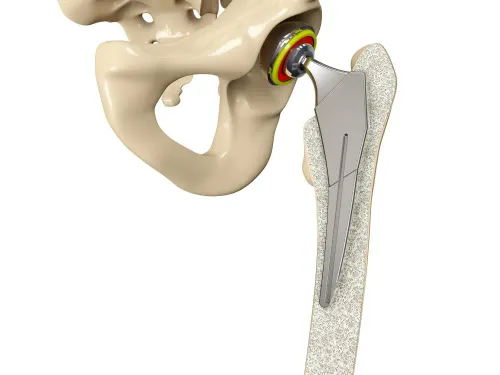
Total ankle replacement involves removing damaged joint surfaces and replacing them with prosthetic components intended to maintain movement through the ankle joint.
The procedure differs from ankle fusion, another surgical option for severe ankle arthritis. Which approach may be appropriate depends on several patient-specific factors.
When should persistent ankle pain be assessed?
An orthopaedic consultation may be useful when there is:
- Long-standing ankle pain
- Increasing stiffness
- Difficulty walking or standing
- Recurrent swelling
- Reduced ability to perform daily activities
- Previous ankle fractures or injuries
- Known arthritis that is becoming more symptomatic
- Inadequate relief despite appropriate conservative treatment
Dr. Sujit Korday evaluates joint symptoms and structural abnormalities before determining whether replacement surgery, another procedure, or continued conservative treatment deserves consideration.
What determines suitability?
Ankle replacement requires careful patient selection.
The surgeon may consider bone quality, joint alignment, ligament stability, deformity, previous operations, activity demands, medical conditions, and the pattern of arthritis.
This means two patients with apparently similar ankle pain may receive different treatment recommendations.
Questions to discuss before ankle replacement
Patients exploring Total Ankle Replacement near Santacruz, Khar and Bandra should understand both the potential role and limitations of the procedure.
Useful questions include:
- How advanced is my ankle arthritis?
- What caused the joint damage?
- Are non-surgical treatments still appropriate?
- Is replacement suitable for my anatomy?
- What alternatives should I consider?
- What restrictions will apply after surgery?
- What does rehabilitation involve?
Recovery also requires planning. Weight-bearing instructions, walking support, wound care, rehabilitation, and return to activities vary according to the operation and individual progress.
For residents of Santacruz, Khar and Bandra and surrounding areas of South Mumbai, Maharashtra, persistent ankle pain should first be approached as a diagnostic problem rather than an automatic indication for replacement.
A comprehensive evaluation helps identify the underlying cause, establish the extent of damage, and determine whether joint-preserving treatment, continued conservative management, ankle replacement, or another surgical strategy is appropriate for the individual patient.
Keywords