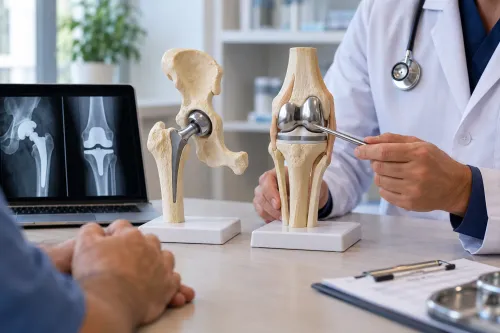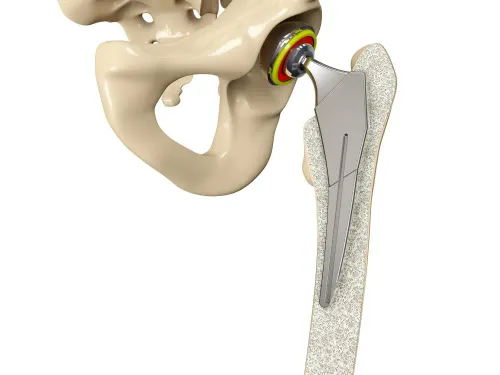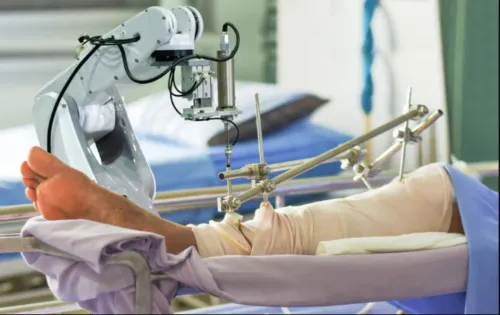
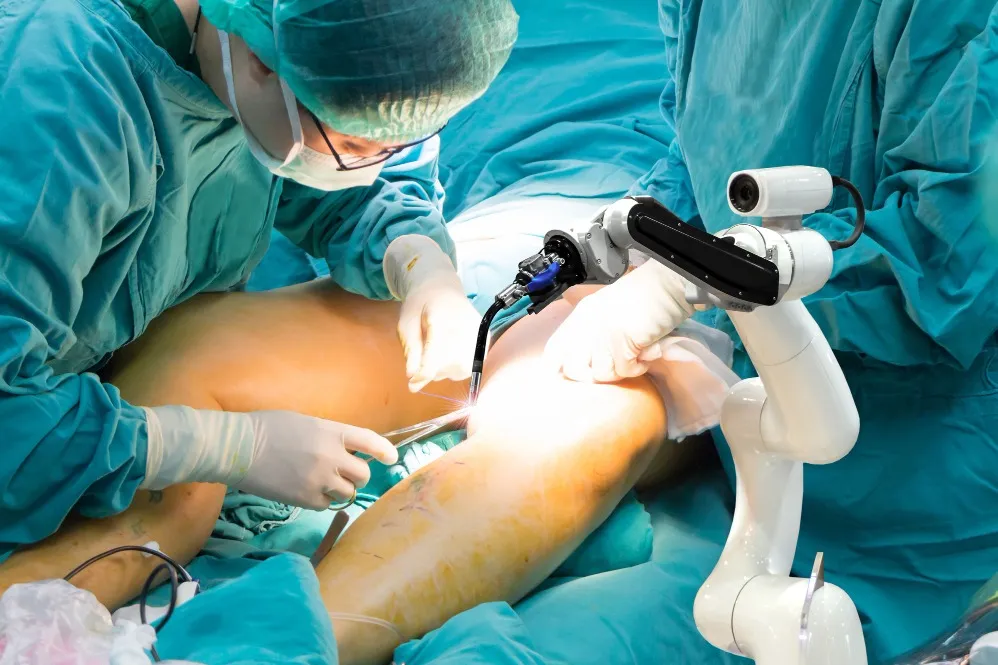
Robotic technology has become an important development within modern knee replacement surgery. For patients researching Robotic Knee Replacement, the key question is usually not whether a robot performs the operation independently, but how robotic assistance may help the surgeon plan plus execute selected parts of the procedure.
Robotic knee replacement remains a surgeon-controlled operation. The technology acts as a planning plus guidance system rather than replacing the orthopaedic surgeon.
How Robotic Knee Replacement Works
Depending on the robotic platform being used, information about the patient's knee anatomy is collected before or during surgery.
The system can help create a detailed representation of the joint. The surgeon uses this information to plan bone preparation, component positioning, plus alignment according to the patient's anatomy.
During surgery, robotic assistance may help the surgeon execute the planned bone cuts within predefined boundaries.
The surgeon remains responsible for clinical decisions throughout the procedure.
Why Precision Matters in Knee Replacement
A knee replacement involves more than removing damaged cartilage. The surgeon needs to consider alignment, ligament balance, implant positioning, bone preservation, plus stability.
Small variations can influence how the reconstructed knee functions.
Robotic systems are designed to provide detailed measurements during planning plus surgery. This additional information may help surgeons make controlled adjustments according to individual anatomy.
Does Every Patient Need Robotic Surgery?
Not necessarily.
Traditional knee replacement has been successfully performed for decades. Robotic assistance represents another surgical tool rather than a universal requirement.
Suitability depends on several factors, including
- Severity of arthritis
- Pattern of joint damage
- Knee deformity
- Previous operations
- Bone anatomy
- Overall health
- Implant requirements
- Surgeon assessment
A consultation should focus first on whether knee replacement itself is appropriate. The technology used is a secondary decision.
What Conditions May Lead to Knee Replacement?
Osteoarthritis is one of the most common reasons for knee replacement. Over time, cartilage becomes thinner, causing increasing friction within the joint.
Patients may experience persistent pain, stiffness, swelling, reduced walking tolerance, difficulty using stairs, or deformity.
Not every person with arthritis needs surgery. Physiotherapy, exercise modification, weight management, medicines, plus selected injections may help during earlier stages.
Replacement becomes more relevant when symptoms remain substantial despite appropriate conservative care.
What Happens Before Surgery?
Preoperative planning may include X-rays, clinical examination, blood investigations, medical fitness assessment, plus evaluation of medications.
The surgeon also assesses knee movement, deformity, stability, muscle strength, plus functional limitations.
Patients should discuss existing medical conditions such as diabetes, heart disease, previous blood clots, infections, or other health concerns because these factors may influence preparation plus recovery.
Rehabilitation Still Matters
Advanced surgical technology does not eliminate the need for rehabilitation.
After robotic knee replacement, patients generally begin guided movement plus walking according to their surgeon's rehabilitation protocol. Physiotherapy focuses on restoring knee movement, muscle strength, balance, plus functional independence.
Recovery varies between individuals. Preoperative fitness, muscle condition, age, general health, pain tolerance, plus adherence to rehabilitation can influence progress.
Understanding Realistic Expectations
Patients should be cautious about claims suggesting that any technology guarantees painless surgery, instant recovery, or a perfect knee.
The purpose of knee replacement is generally to reduce arthritis-related pain plus improve function. Individual outcomes vary.
For patients considering robotic knee replacement in Bandra, Maharashtra, an orthopaedic evaluation can clarify whether the extent of arthritis justifies replacement plus whether robotic assistance is appropriate.
Dr. Sujit Korday assesses knee problems based on symptoms, examination, imaging, previous treatment, plus mobility requirements. Technology can provide useful surgical support, but good treatment begins with correct patient selection, careful planning, appropriate surgery, plus structured rehabilitation.
Keywords