A Mumbai joint fusion quote is not one standard package: the joint treated, fixation hardware, hospital stay, anaesthesia, imaging and rehabilitation all change the final bill. By comparing an itemized estimate, checking insurance rules and understanding recovery restrictions, you can decide whether arthrodesis fits your diagnosis and budget.
Key takeaways
- Ask for an itemised quote covering implants, bone graft, hospital care and follow-up.
- Confirm which diagnosis, joint and alternative treatments make fusion appropriate.
- Plan for restricted weight-bearing, wound checks, physiotherapy and assistive devices.
- Verify surgeon credentials, implant details, exclusions and pre-authorisation requirements.
What does joint fusion surgery cost in Mumbai include?
There is no single joint fusion surgery cost in Mumbai: fusing a toe, foot, ankle, wrist, knee or spine involves different equipment, operating time and hospital care. The technique also changes the bill; open and minimally invasive arthrodesis may require different fixation hardware, bone graft and recovery support.
The phrase “joint fusion for surgery cost in mumbai” is therefore not a standardised price.
Request an itemised estimate and check these entries before booking:
- Surgeon’s fee, anaesthetist’s fee, operating-room charges and the planned admission duration.
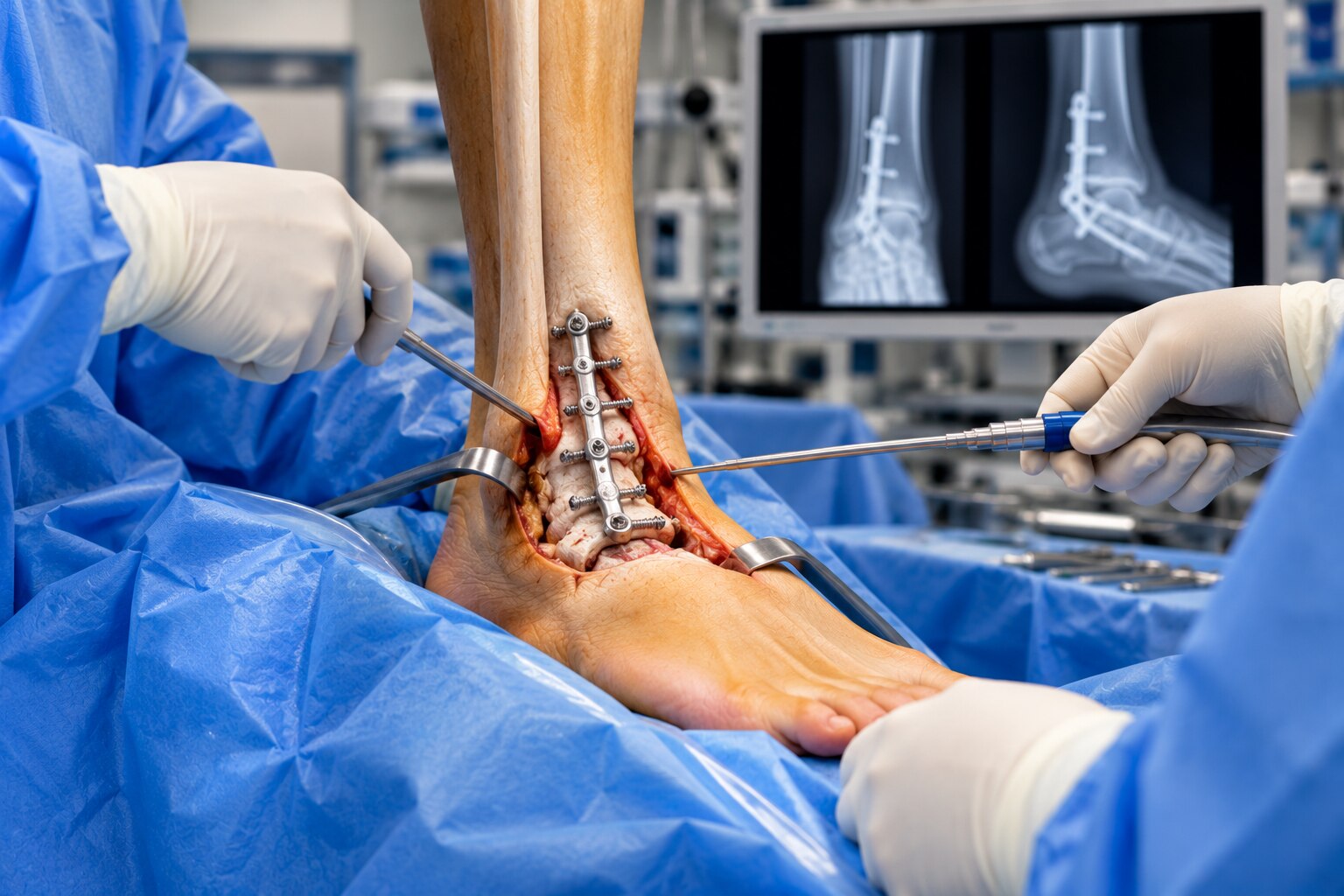
- Plates, screws, rods, staples or other implants, plus bone graft and graft substitutes.
- Pre-operative blood tests, X-rays, CT or MRI scans, and medical clearance.
- Room category, nursing, medicines, dressings, casts, cast changes and walking boots.
- Post-operative X-rays, surgeon follow-up visits and physiotherapy sessions.
- The stated cost of treating infection, delayed union, nonunion or revision surgery.
Compare like with like. A low package price that excludes implants, imaging or follow-up can become more expensive than a higher complete estimate. Ask whether GST, emergency charges and extra hospital nights are included.
For joint fusion surgery cost in Mumbai, also ask your insurer or employer whether arthrodesis is covered, whether pre-authorisation is required, and which discharge summary, implant invoice, operative note and final bill are needed for cashless approval or reimbursement.
Bring previous scans, medication and allergy lists, and records of diabetes, smoking or earlier operations to the consultation.
Which diagnoses make fusion worth considering?
Fusion becomes worth considering when a joint causes daily pain, instability or deformity after appropriate non-surgical treatment. Common diagnoses include end-stage ankle, foot, toe or wrist arthritis, post-traumatic arthritis, an infected or failed joint reconstruction after infection is controlled, severe deformity, and selected fractures that cannot heal in a functional position.
The decision is not based on an X-ray alone. Ask which movement will disappear, how walking or gripping will change, and whether nearby joints will carry extra stress over time. Searching for arthrodesis surgery in mumbai should lead to a diagnosis-specific discussion, not a generic procedure quote.
| Option | What it does | Main trade-off |
|---|---|---|
| Fusion (arthrodesis) | Removes painful movement by creating a solid bone bridge | Permanent loss of movement at that joint; greater load on adjacent joints |
| Joint replacement | Removes damaged surfaces and preserves useful movement | Implant wear, loosening, infection and revision risk |
| Osteotomy | Realigns bone to shift pressure away from damaged cartilage | Requires bone healing and suits selected deformities or early disease |
| Reconstruction | Repairs or replaces damaged ligaments, tendons or cartilage | Fails when the joint surface is too severely worn |
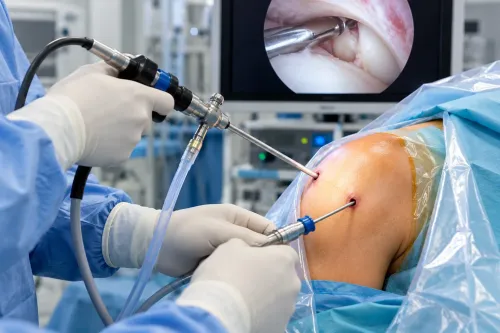
| Arthroscopy | Treats selected cartilage, loose-body or impingement problems through small incisions | Cannot reliably solve end-stage arthritis |
| Continued non-surgical care | Uses footwear, bracing, activity changes, physiotherapy and medicines | Avoids surgery but does not remove advanced joint damage |
A younger patient with severe deformity or high physical demands may favour fusion, while preserved motion may make replacement preferable. Minimally invasive or arthroscopic fusion still sacrifices movement and does not guarantee faster union or immediate weight-bearing.
How does a surgeon decide whether fusion is suitable?
Suitability depends on proving that the joint is causing the pain, measuring its effect on movement, and deciding whether the bone can heal safely after fixation. A joint fusion surgeon in Mumbai uses this assessment to avoid fusing the wrong joint when neighbouring joints mimic its pain.
During examination, the surgeon checks tenderness, swelling, deformity, skin condition, motion and strength. Standing X-rays show alignment, weight-bearing space and bone contact under load. CT maps joint-surface damage, deformity and bone stock; MRI assesses cartilage, tendons, marrow or infection when X-rays do not explain symptoms.
Gait assessment shows how you load the painful side and whether another joint compensates.
The risk review focuses on:
- Active infection, open wounds or poor skin condition
- Diabetes, especially poorly controlled glucose
- Poor circulation or arterial disease
- Smoking, vaping or nicotine-replacement use, which can impair blood supply and bone healing
- Osteoporosis or inadequate bone stock
- Previous surgery, scar tissue, altered anatomy or retained hardware
- Severe deformity or inadequate bone contact, which can increase nonunion risk
Your history includes medicines, allergies, nutrition, vascular disease and prior infections. The surgeon reviews braces, injections, physiotherapy, footwear changes and other previous treatment to confirm that pain persists despite appropriate care.
Treat active infection first, improve glucose control, assess circulation and address nutrition or nicotine exposure. Bring previous X-rays or CT/MRI scans, operation reports, and a clear account of walking limits and work or sports demands.
What does recovery care involve after arthrodesis?
Recovery care after arthrodesis involves protecting the fixation until bone union is visible, not simply waiting for the incision to close. After arthrodesis surgery in Mumbai, your surgeon will set weight-bearing limits based on the joint fused, fixation stability, bone quality and follow-up X-rays.
- Keep the dressing clean and dry, and attend planned wound checks. Report increasing redness, drainage, fever, wound separation, numbness or worsening pain promptly.
- Use the prescribed cast, splint or walking boot. Do not remove it, adjust it or place weight through it unless instructed.
- Follow protected weight-bearing instructions with crutches, a walker or another aid. Walking comfortably does not prove that the fusion is strong; premature loading can shift hardware, lose correction or contribute to nonunion.
- Attend serial X-rays and examinations. They show whether bone is bridging across the joint before your surgeon permits unrestricted walking or activity.
- Begin physiotherapy when cleared. Early treatment may focus on swelling control, safe transfers and strength; later work targets gait, balance and movement in the joints that remain flexible.
A healed skin incision is not the same as a fused joint. You might return to desk work before radiographic union, while standing jobs, driving, running and impact sports require separate clearance.
Smoking, vaping, diabetes, poor circulation, osteoporosis, infection and previous surgery can slow wound or bone healing, so disclose them and follow the optimisation plan.
How should you verify the surgeon, quote and insurance cover?
Before you book joint fusion consultation in Mumbai, verify the surgeon’s experience with your specific joint and procedure, not just a general orthopaedic title. A joint fusion surgeon in Mumbai should explain the proposed fixation, healing milestones and failure plan in plain language.
- Ask how many comparable fusions the surgeon performs each year, which fixation method is planned, the expected time to union, and the nonunion and revision rates for similar patients.
- Ask what happens if the bones do not unite: continued immobilisation, bone grafting, revision fixation or another treatment.
- Request an itemised estimate for the joint fusion surgery cost in Mumbai. Check implants, bone graft, surgeon and anaesthesia fees, operating-room charges, admission and room category, medicines, dressings, imaging, cast or boot changes, physiotherapy, follow-ups and delayed-union or nonunion treatment.
- Before scheduling, ask the insurer or TPA whether the hospital is cashless and whether pre-authorisation covers the proposed implant, room category and rehabilitation.
For cashless approval, keep your policy or health-card copy, government ID, surgeon’s advice, diagnosis, imaging, medical reports and the itemised estimate. For reimbursement, obtain the final bill, discharge summary, operative note, implant stickers, prescriptions, investigation reports, payment receipts and claim form.
Bring prior X-rays, CT or MRI images and reports, medication and allergy lists, diabetes or circulation records, smoking or vaping details, previous operation notes, and a description of walking limits and work or sports demands. Dr. Sujit Korday- Orthopaedic Surgeon can use these records to test whether the painful joint matches the imaging.
Related service
Joint fusion also known as Arthrodesis, is a surgical procedure that joins two bones in a joint. View service → |
Frequently asked questions
What does joint fusion surgery cost in Mumbai include?
The quote can include the surgeon and anaesthetist fees, operating-room charges, hospital stay, imaging, fixation hardware, bone graft, medicines, dressings, physiotherapy and follow-up visits. Ask for each item separately and confirm exclusions.
Which diagnoses make fusion worth considering?
Surgeons may consider arthrodesis for severe joint damage from arthritis, an old injury, deformity, instability, infection or failed previous surgery. Suitability depends on the joint, pain, function, imaging and available alternatives.
How does a surgeon decide whether fusion is suitable?
The assessment includes your symptoms, examination, X-rays or other scans, joint stability, deformity, bone quality, activity needs and previous treatment. The surgeon also compares fusion with joint replacement, reconstruction or continued non-surgical care.
What does recovery care involve after arthrodesis?
Recovery can involve a splint or cast, wound care, pain medicines, elevation, assistive devices, restricted weight-bearing and follow-up imaging. Physiotherapy begins at the stage your surgeon considers safe and focuses on strength, mobility and function.
How should you verify the surgeon, quote and insurance cover?
Check the surgeon’s medical registration and experience with your specific joint, request an itemised written estimate, confirm the implant and hospital details, and ask your insurer about pre-authorisation, exclusions, room limits and reimbursement documents.
Keywords