A straightforward elbow arthroscopy in Mumbai may cost about ₹80,000–₹2,50,000, while complex ligament, cartilage, fracture or contracture procedures can reach ₹2,50,000–₹5,00,000 or more. You will be able to compare itemised quotes, judge whether keyhole surgery fits your diagnosis, and check a surgeon’s training, hospital arrangements and recovery plan before booking.
Key takeaways
- Straightforward elbow arthroscopy costs about ₹80,000–₹2,50,000 in Mumbai.
- Complex reconstruction or cartilage treatment can exceed ₹2,50,000.
- Confirm surgeon fees, hospital charges, implants, tests and physiotherapy in writing.
- Choose a surgeon who performs elbow arthroscopy and explains non-surgical alternatives.
What does elbow arthroscopy cost in Mumbai, and what does the quote include?
A practical self-pay elbow arthroscopy cost in Mumbai is approximately ₹80,000–₹2,50,000 for a relatively straightforward procedure. Complex work can cost ₹2,50,000–₹5,00,000 or more, particularly when reconstruction, contracture release or cartilage treatment is involved.
| Procedure scope | Indicative self-pay range | What can increase it |
|---|---|---|
| Straightforward arthroscopy | ₹80,000–₹2,50,000 | Longer operating time, admission or extra instruments |
| Complex arthroscopy | ₹2,50,000–₹5,00,000 or more | Ligament reconstruction, cartilage work, anchors or multiple procedures |
Two Mumbai quotes can differ because they cover different surgical scopes, not because one surgeon is necessarily better. One package might cover day-care treatment; another might include an overnight stay, implants and more extensive surgery.
Ask for an itemised estimate separating:
- Surgeon, hospital or operating-room, and anaesthetist fees
- Diagnostic tests, medicines and disposable instruments
- Implants or anchors, with implant charges stated at actual cost
- Overnight admission, including the number of nights
- Physiotherapy and follow-up visits
Before booking, ask whether the price covers day-care or inpatient treatment, a possible conversion to open surgery, and additional procedures found during the operation. Check whether consultation, blood tests, X-rays or MRI are excluded. Also budget for a brace, travel and rehabilitation; these costs can make a low surgical quote more expensive overall.
When is elbow keyhole surgery suitable—and when is another treatment safer?
Elbow keyhole surgery in Mumbai suits a defined joint problem, not an abnormal scan by itself. Common reasons include:
- Loose bodies causing catching or locking
- Inflamed synovium (synovitis)
- Persistent tennis-elbow-related disease after non-operative treatment
- Stiffness from scar tissue or contracture
- Cartilage damage
- Selected osteoarthritis
- Some ligament injuries or fractures
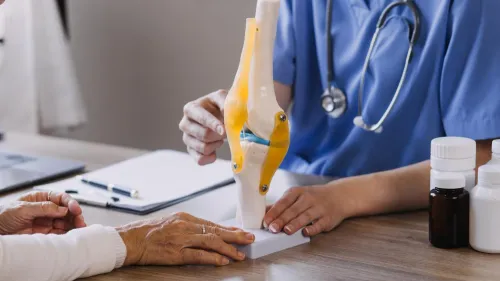
The diagnosis combines your pain pattern, tenderness, range-of-motion testing and nerve examination with X-rays, MRI and, when bone detail matters, CT. Do not operate on an MRI finding that does not match your symptoms and examination; elbow imaging abnormalities often do not explain pain or lost movement.
| Option | When it fits | Important limitation |
|---|---|---|
| Physiotherapy or activity modification | Mild stiffness, tendon disease or overload | Requires consistent rehabilitation and time |
| Injection | Selected inflammatory or painful conditions | May relieve symptoms without correcting loose bodies or mechanical blockage |
| Observation | Stable symptoms without locking, major weakness or progressive loss of movement | Does not remove a persistent structural cause |
| Arthroscopy | Accessible loose bodies, synovitis, contracture or selected cartilage and ligament problems | Small working space and nearby nerves make it technically demanding |
| Open surgery | Severe deformity, unstable fracture or pathology needing direct access | Larger incision and recovery burden |
Keyhole surgery is the wrong choice with infection, advanced arthritis, substantial deformity or an unstable fracture. Seek a second opinion for nonspecific pain, tingling, hand weakness, substantial deformity, or a recommendation based mainly on an MRI report. Ask the surgeon to state the diagnosis, alternatives and when open surgery is safer.
What happens during elbow arthroscopy, and what risks should you weigh?
The operation uses general or regional anaesthesia, with your arm positioned on a support while you lie on your side, stomach or back.
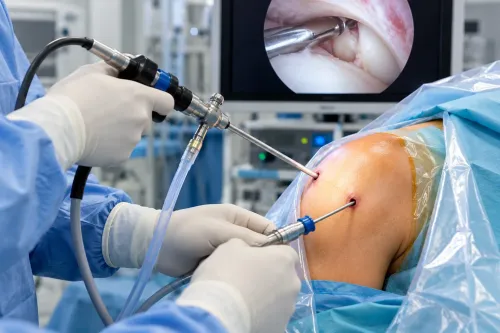
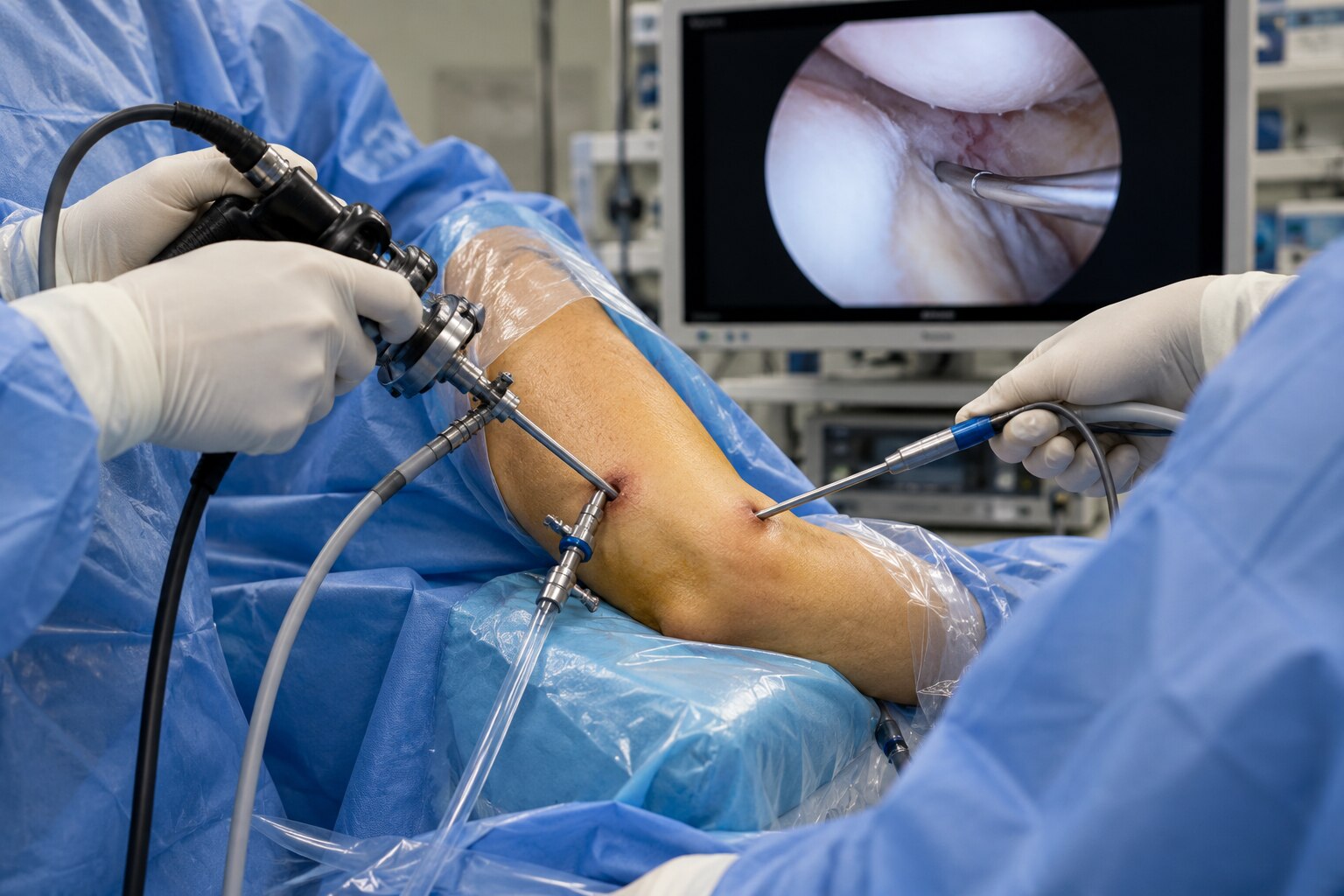
The surgeon creates several small portals around the elbow, pumps sterile fluid into the joint to improve visibility, and inserts a camera plus specialised instruments to remove loose bodies, release scar tissue, treat cartilage or address other identified problems.
- The anaesthetist reviews your health, medicines and fasting instructions before anaesthesia.
- The surgeon marks the portals and protects the ulnar nerve and other structures near the joint.
- The camera examines the joint, while instruments work through separate portals.
- The team closes the portals and applies a dressing, splint or sling if the procedure requires protection.
- You leave the same day when pain, alertness and movement are satisfactory; extensive work, medical conditions or limited home support can make an overnight stay safer.
Small incisions do not make every elbow operation minor. The joint offers limited working space, and the ulnar nerve lies close to it; treatment that involves reconstruction, fracture fixation or substantial cartilage work carries a different burden from simple loose-body removal.
Ask the surgeon to explain the risks of infection, bleeding, stiffness, persistent pain, cartilage damage, nerve or blood-vessel injury, fluid leakage into surrounding tissues, and compartment-related complications. Further arthroscopy or conversion to open surgery may be necessary if keyhole access is unsafe or incomplete.
Before scheduling, disclose diabetes, smoking, blood thinners, immune suppression, active infection, prior elbow surgery, and numbness or tingling in the ring or little fingers. Never stop a blood thinner without instructions from the prescribing clinician and surgical team.
How long is recovery after elbow arthroscopy?
Recovery ranges from a few weeks for basic movement to several months for full strength and sport, depending on what the surgeon repairs. Loose-body removal or contracture release often requires early movement to prevent renewed stiffness; ligament reconstruction, fracture fixation and cartilage procedures can require a brace and restricted loading.
- Sling: Use it for comfort after simpler procedures, but follow the prescribed duration rather than keeping the elbow still unnecessarily.
- Wound care: Keep portal dressings clean and dry, watch for increasing redness, drainage, fever or worsening pain, and attend the wound review when scheduled.
- Physiotherapy: Begin exercises at the time specified by your surgeon. Therapy may focus first on motion, then strength, lifting control and sport-specific drills.
- Daily activities: Desk work may resume within days if pain and medication allow. Driving requires comfortable control of the wheel and gearshift, no distracting sedatives, and a surgeon’s clearance.
- Loading: Avoid lifting until the repair permits it. Contact sport, throwing and racquet sports usually return after strength and motion testing, not simply when the skin heals.
- Follow-up: Plan visits for wound review, range-of-motion checks and progression of restrictions; urgent review is needed for numbness, a cold hand or rapidly increasing swelling.
Compare the total cost, not only the operation quote. Add brace charges, therapy sessions, medicines, travel, review visits and income lost during recovery. A longer rehabilitation plan can make a cheaper surgical estimate more expensive overall.
How should you choose an elbow arthroscopy surgeon in Mumbai and prepare to book?
A safe choice starts with verifiable credentials, not a generic “keyhole surgery” claim. Check the surgeon’s current registration in the National Medical Commission’s Indian Medical Register or the relevant state medical council, then review formal orthopaedic training and fellowship or substantial experience in elbow, upper-limb or sports arthroscopy.
- Ask how frequently the surgeon performs the exact proposed procedure, such as loose-body removal, contracture release or ligament treatment.
- Request the diagnosis, operative plan, alternatives, rehabilitation restrictions and the situations that would require conversion to open surgery.
- Obtain an itemised written estimate covering surgeon and anaesthetist fees, operating-room charges, tests, medicines, disposables, implants or anchors, admission and follow-up.
- Confirm whether the hospital provides suitable anaesthesia, emergency care and overnight monitoring, and ask who will conduct reviews and physiotherapy.
- Disclose prior elbow surgery and numbness or tingling in the ring or little fingers before scheduling.
| Surgeon comparison | What to verify | Warning sign |
|---|---|---|
| Credentials | Registration, orthopaedic training and elbow-focused experience | No registration details or vague qualifications |
| Procedure fit | Experience with your specific operation and symptom-examination correlation | Recommendation based only on an MRI report |
| Hospital safety | Anaesthesia, emergency response and complication management | Unclear responsibility after discharge |
Before you book elbow arthroscopy in Mumbai, ask what happens if an additional procedure is needed and whether implants are billed at actual cost. Assess Dr. Sujit Korday- Orthopaedic Surgeon using these same clinical, cost and hospital-safety criteria, not the service label alone.
Related service
Arthroscopic Surgery of Elbow Arthroscopic Surgery of Elbow View service → |
Frequently asked questions
What does elbow arthroscopy cost in Mumbai?
A straightforward procedure costs approximately ₹80,000–₹2,50,000. Complex reconstruction, contracture release or cartilage treatment can cost ₹2,50,000–₹5,00,000 or more.
When is elbow arthroscopy suitable?
It can suit selected problems such as loose bodies, stiffness, cartilage damage or conditions requiring minimally invasive treatment. Your diagnosis, imaging and examination determine suitability.
What risks should you consider before elbow arthroscopy?
Discuss infection, bleeding, nerve or blood-vessel injury, stiffness, persistent pain, anaesthesia risks and the possibility of further treatment with your surgeon.
How long does recovery take after elbow arthroscopy?
Recovery depends on the procedure performed. Simple diagnostic or loose-body procedures differ from contracture release, cartilage treatment or reconstruction, so ask for a procedure-specific rehabilitation timeline.
How do you choose an elbow arthroscopy surgeon in Mumbai?
Check the surgeon’s orthopaedic training, experience with elbow arthroscopy, hospital facilities, proposed procedure, total written estimate and follow-up rehabilitation plan.
Keywords