A private primary knee replacement in Mumbai can cost about ₹2 lakh to ₹5 lakh, while premium implants, robotic assistance, longer admission, or complications can push the bill to ₹6 lakh or more. You will be able to compare quotations line by line, estimate your likely out-of-pocket payment, check insurance conditions, and understand which clinical findings support total replacement.
Key takeaways
- Budget ₹2 lakh–₹5 lakh for a typical private single-knee replacement.
- Request an itemised quote covering the implant, surgeon, room, medicines, and physiotherapy.
- Check whether insurance covers the implant, robotic assistance, hospitalisation, and rehabilitation.
- Confirm the diagnosis, implant model, package exclusions, and follow-up plan before booking.
What does total knee replacement cost in Mumbai include?
A primary, single-knee replacement in Mumbai commonly costs about ₹2 lakh–₹5 lakh in the private sector. A basic package may cost below ₹2 lakh, while a premium hospital, imported implant, robotic assistance, or longer admission can push the bill to ₹6 lakh or more.
The total knee replacement cost in Mumbai and the TKR cost in Mumbai are estimates, not fixed rates, because hospitals bundle different services, implants, room categories, and admission periods.
The hospital episode may include:
- Surgeon fee and assistant fee
- Anaesthetist fee
- Operating-room and theatre consumables
- Implant cost, including the selected manufacturer and model
- Room category, nursing care, and hospital services
- Medicines, blood tests, and imaging
- Immediate inpatient physiotherapy
- Follow-up consultations and some follow-up imaging
A typical uncomplicated admission lasts about 2–4 days. Infection, uncontrolled diabetes, anaemia, urinary problems, cardiopulmonary disease, or delayed mobility can extend the stay and increase the final bill through additional medicines, tests, monitoring, physiotherapy, or intensive care.
Ask for a written, itemised quotation showing what the package includes and excludes. A low advertised price may assume a shared room, standard implant, uncomplicated recovery, and no extra investigations; a higher quote may include a private room, premium implant, robotic assistance, or longer postoperative care.
Outpatient physiotherapy, transport, walking aids, home assistance, and later visits may remain separate expenses.
How should you compare hospital quotations and implant options?
Request a written, itemised estimate before comparing the total knee replacement price in Mumbai. The knee replacement surgery cost in Mumbai should show separate amounts for the implant, manufacturer, material, surgeon and assistant fees, anaesthesia, operating-room charges, room category, nursing, investigations, blood tests, medicines, physiotherapy, follow-up visits, GST, and every additional inpatient day.
| Package type | What the headline may include | What to verify |
|---|---|---|
| Shared-room base package | Standard cemented implant and uncomplicated admission | Exclusions, extra-day rate, investigations, and room upgrade cost |
| Premium private-room package | Higher room charge, premium implant, or added monitoring | Robotic or navigation fee, rehabilitation, GST, and complication cover |
Ask these questions in writing:
- Is the implant standard or premium? State the exact model, manufacturer, material, and price.
- Does the surgeon use this system routinely, and what warranty, service, or revision policy applies?
- Are robotic or computer-navigation charges optional, and are they included in the quoted amount?
- Are complications, intensive-care monitoring, revision surgery, implant removal, stems, or augments excluded?
- What does each extra inpatient day cost, including room, nursing, medicines, and doctor visits?
Standard cemented systems often cost less than selected imported systems, but a higher price does not prove a better fit. Age, bone quality, deformity, ligament stability, activity level, and the surgeon’s experience with the proposed system should guide selection.
Compare package contents, not headline numbers: a shared-room base estimate and a premium private-room estimate are not comparable.
What will insurance, employer benefits, or government schemes actually pay?
A verbal promise that your insurer will “cover the surgery” is not approval. Before admission, obtain written confirmation of the sanctioned package and your expected contribution; this matters more than any advertised tkr cost in mumbai or total knee replacement cost in mumbai.
1. Give the insurer, hospital billing desk, employer benefits team, or government-scheme help desk your policy or health-card details and ask them to confirm eligibility, whether the hospital is in-network, the package limit, cashless procedure, and claim deadlines.
2. Submit identification, the doctor’s advice, weight-bearing X-rays and other reports, the itemised estimate, implant name and details, and relevant prior medical records. Ask for pre-authorisation in writing, including the approved package, sanctioned amount, room category, implant allowance, and expected patient payment.
3. Check the approval for the policy’s waiting period, exclusions, room-rent limit, co-pay, deductible, implant sub-limit, and non-medical exclusions. A room upgrade can make you pay the difference, and some schemes approve a package without covering every hospital charge.
4. Ask what happens if admission exceeds the quoted days, physiotherapy continues after discharge, or complications require intensive care, implant removal, revision surgery, stems, or augments. Confirm whether employer or government benefits follow a fixed package rather than the hospital’s full estimate.
Your remaining bill can include non-payable items, consumables, attendant charges, upgraded-room differentials, take-home medicines, physiotherapy, walking aids, transport, and follow-up imaging. Request a written list of exclusions and keep every approval, invoice, discharge summary, prescription, and receipt for the claim.
Which findings support total replacement, and what recovery costs should you plan for?
Persistent pain and loss of function despite appropriate non-surgical treatment support replacement only when examination and imaging show advanced joint damage. An abnormal X-ray alone does not justify surgery.
Your surgeon may assess:
- Knee range of motion and fixed deformity
- Ligament stability, muscle strength, and walking pattern
- Weight-bearing knee X-rays
- A standing long-leg radiograph to measure overall alignment
Findings usually guide the choice as follows:
| Option | Findings | Likely plan |
|---|---|---|
| Continued non-surgical care | Symptoms remain manageable, or examination does not match the X-ray | Exercise, weight management, medicines, injections, or other treatment |
| Partial replacement | Damage is confined to one compartment, with suitable alignment, motion, and intact ligaments | Replace only the affected compartment |
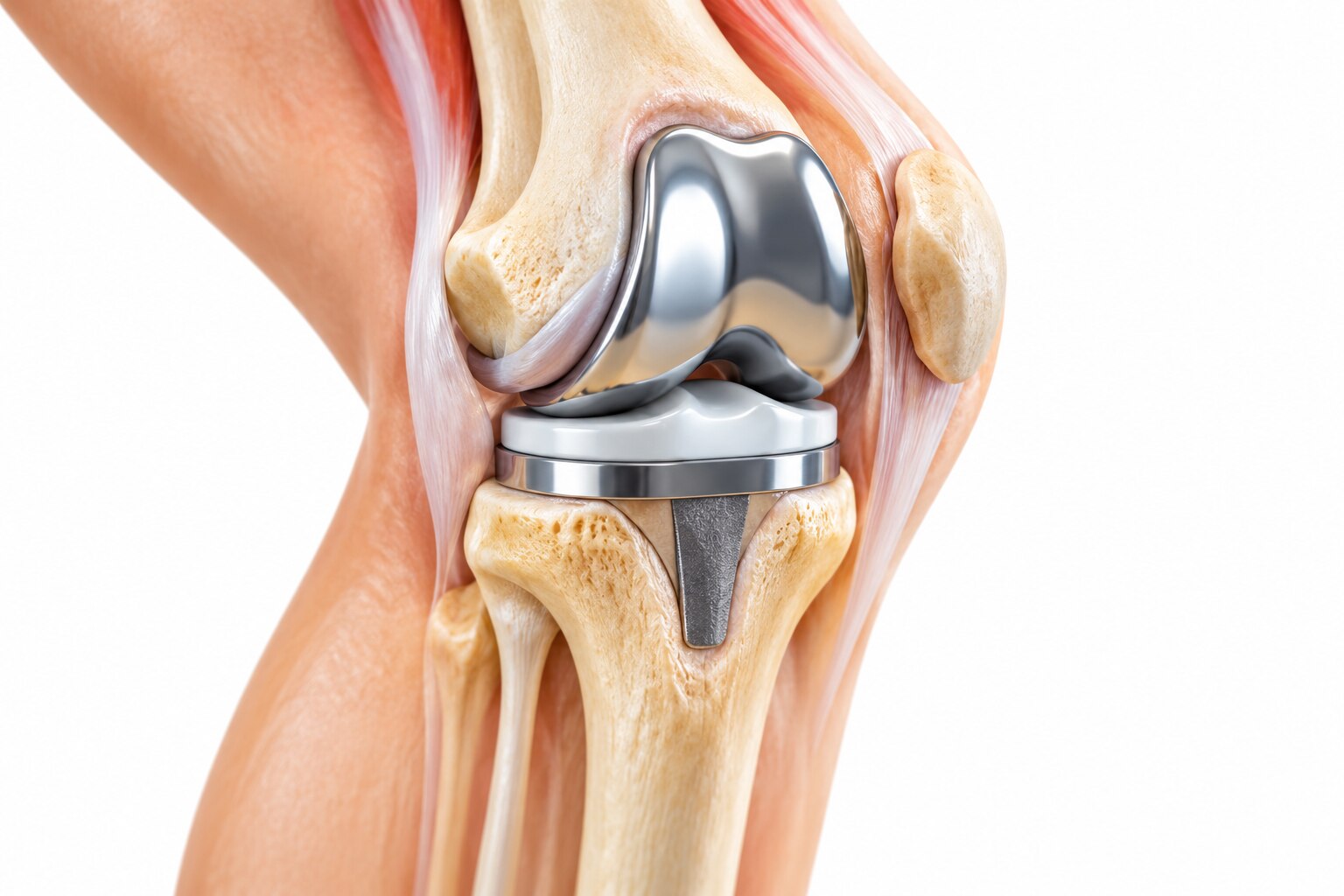
| Total replacement | Advanced damage affects multiple compartments, with substantial pain, deformity, stiffness, or ligament insufficiency | Replace the whole joint |
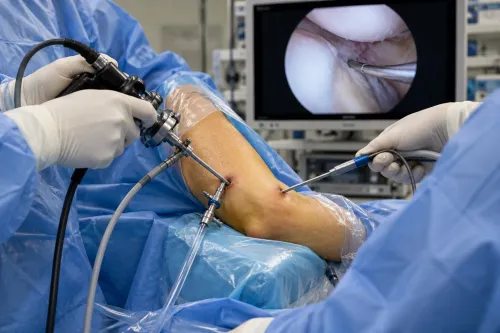
Arthroscopy is not a routine substitute for total replacement in advanced osteoarthritis. It is unlikely to correct widespread cartilage loss.
Plan beyond the hospital quotation for a walker immediately after surgery, outpatient physiotherapy, and home exercises for several weeks. Add transport, home assistance, walking aids, and follow-up imaging if you cannot manage stairs or daily tasks alone. Strength, stair control, kneeling comfort, and confidence often keep improving for 3–6 months.
A consultation with Dr. Sujit Korday- Orthopaedic Surgeon can connect the proposed operation and implant to these findings and produce a written estimate, helping you judge the knee replacement surgery cost in Mumbai and total knee replacement price in Mumbai against your expected recovery needs.
Related service
Total Knee Replacement (TKR) — also called Total Knee Arthroplasty — is a surgical procedure in which the entire knee joint is replaced with artificial components... View service → |
What should you confirm before booking the operation?
Before signing, confirm whether the quotation covers one knee or both. Simultaneous bilateral replacement should have its own package and consent discussion: it is not simply two operations, and early rehabilitation demands are greater.
Ask the hospital to confirm:
- The number of admission days included and the per-day charge if your stay extends.
- The exact implant name, manufacturer, model, material, and cost.
- Whether robotic or navigation assistance is optional, and its separate charge.
- Which blood tests, imaging, medical clearances, medicines, physiotherapy, and follow-up visits are included.
- Whether diabetes treatment, anaemia, heart or lung assessment, intensive-care monitoring, or another medical problem found before or after surgery is billed separately.
- Whether complications, implant removal, or revision-related treatment is excluded.
| Operation | What the quotation should identify | Why the distinction matters |
|---|---|---|
| Primary replacement | One knee, standard implant, included hospital days, and package exclusions | Applies to an uncomplicated first replacement |
| Simultaneous bilateral replacement | Separate bilateral package, rehabilitation plan, and medical-risk assessment | Recovery demands are greater than for one knee |
| Revision replacement | Removal of old components, specialised implants, stems or augments, surgery time, and admission length | It can cost and take substantially more than primary surgery |
A low knee replacement price in Mumbai may assume a shared room and uncomplicated care. Compare the written total, exclusions, clinical plan, surgeon experience with the proposed system, insurance contribution, and realistic post-discharge spending—not only the total knee replacement price in Mumbai or the advertised knee replacement surgery cost in Mumbai.
Frequently asked questions
What does total knee replacement cost in Mumbai include?
A private primary single-knee replacement commonly costs ₹2 lakh–₹5 lakh. The final bill depends on the hospital, implant, surgeon, room category, admission length, medicines, tests, and additional services such as robotic assistance.
How should you compare hospital quotations and implant options?
Compare itemised quotations rather than headline package prices. Check the implant brand and model, surgeon and anaesthesia fees, room charges, consumables, medicines, physiotherapy, follow-up visits, and exclusions. Ask whether robotic assistance is included and whether it changes the total price.
What will insurance, employer benefits, or government schemes actually pay?
Coverage depends on your policy, employer plan, hospital network, waiting periods, co-pay, room-rent limits, implant limits, and pre-authorisation. Ask the insurer or scheme administrator for written confirmation of covered amounts and exclusions before admission.
Which findings support total replacement, and what recovery costs should you plan for?
Severe pain, loss of function, advanced joint damage on examination and imaging, and failure of appropriate non-surgical treatment support a replacement discussion. Budget for physiotherapy, medicines, mobility aids, transport, time away from work, and follow-up care.
What should you confirm before booking the operation?
Confirm the diagnosis, operation and implant details, itemised package, exclusions, expected hospital stay, blood requirements, insurance approval, rehabilitation plan, warning signs, follow-up schedule, and the process for handling unexpected costs.
Keywords