
Pain, weakness and stiffness do not automatically mean you need knee arthroscopy, while a scan showing a meniscal or ligament injury does not automatically make physiotherapy enough. The right choice depends on how the injury happened, whether the knee is mechanically blocked, what examination shows, and whether a structured non-surgical plan improves your function.
Key takeaways
- Pain with weakness often improves through targeted physiotherapy.
- A locked knee, unstable joint, or major injury needs specialist assessment.
- Examination and imaging help distinguish rehabilitation needs from surgical problems.
- Ask about diagnosis, alternatives, recovery time, and expected results before treatment.
Start with the Symptom: Pain and Weakness or a Mechanically Blocked Knee?
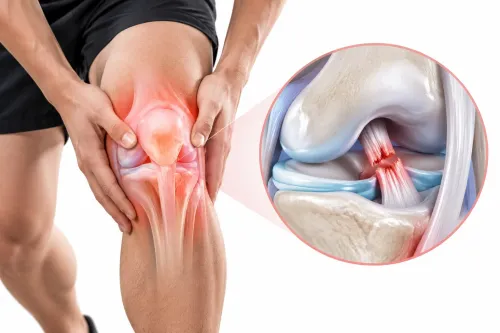
Pain with weakness, stiffness, or pain at the front of the knee usually points toward physiotherapy, not immediate arthroscopy. Patellofemoral pain, tendinopathy, mild sprains, muscle weakness, and movement-control problems often improve when you strengthen the quadriceps and hips, restore motion, and reduce the load that provokes symptoms.
This is the more useful starting point in knee arthroscopy versus physiotherapy: exercises address poor capacity and control, while surgery cannot correct ordinary weakness or overload.
A true locked knee is different from occasional clicking. If you cannot fully straighten the knee because a displaced meniscal fragment or loose body is blocking movement, arrange prompt orthopaedic assessment.
After an acute injury, seek assessment rather than managing the knee with exercises alone if you have:
- Immediate swelling after the injury
- Inability to bear weight
- Recurrent giving way or a feeling of instability
- Major loss of motion
These signs can indicate a fracture, major ligament injury, or displaced meniscal tear. You may need an examination and appropriate imaging before choosing treatment.
Intermittent clicking without pain is usually not a surgical indication. An MRI showing a degenerative meniscal tear also does not prove that the tear causes your symptoms; osteoarthritis, patellofemoral pain, weakness, or altered movement may be responsible.
Physiotherapy suits pain and weakness, while mechanical blockage or persistent instability requires a clinician to identify whether repair or reconstruction is needed.
What Physiotherapy Can Fix Without Knee Surgery
A proper non-surgical trial is an active, measured programme—not rest while hoping pain disappears. For knee osteoarthritis and a non-locked degenerative meniscal tear, exercise therapy and weight management are preferred alternatives to knee arthroscopy.
A physiotherapist may structure it around:
- Supervised quadriceps and hip strengthening to improve knee support.
- Range-of-motion, balance and movement-control exercises.
- Tendon loading for tendinopathy, progressing from controlled effort to sport-specific demand.
- Home exercises performed consistently between appointments.
- Load modification and a staged return to walking, work, running or sport.
Load modification means reducing the movement that provokes symptoms without stopping all activity. Use pain during exercise and your symptoms later that day or the next morning to guide progression; a clear flare means reduce the load, range or repetitions.
Track practical change: walking distance, stair use, sitting tolerance, swelling, knee strength and whether you can perform the activities that matter to you. An MRI showing a degenerative tear does not prove that the tear causes the pain. The scan may show age-related change while osteoarthritis, patellofemoral pain, weakness or altered movement drives symptoms.
In suitable non-locked cases, trials show exercise-based therapy can match early partial meniscectomy for function. Set the reassessment point from the diagnosis, examination and progress—not an invented universal number of weeks.
When Arthroscopy or Reconstruction May Be the Better Option
A persistently locked knee from a displaced meniscal fragment, a painful loose body, a repairable traumatic meniscal tear, or a confirmed ligament injury with ongoing instability is unlikely to recover through physiotherapy alone. These problems need prompt assessment because tissue may need removal, repair or reconstruction.
| Option | What it does | When it applies |
|---|---|---|
| Meniscal repair | Preserves the meniscus and its load-sharing function | A tear pattern and blood supply make healing realistic |
| Partial meniscectomy | Trims damaged tissue that cannot be repaired | A damaged fragment causes symptoms and preservation is not feasible |
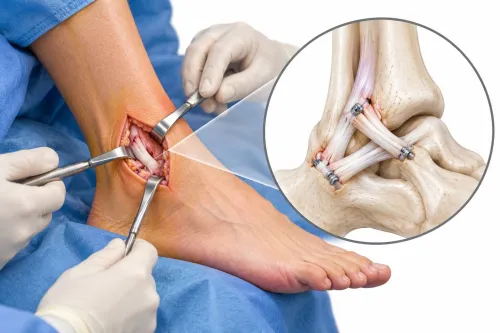
| Ligament reconstruction | Replaces a torn ligament to restore stability | Instability persists after a confirmed injury |
Meniscal preservation is preferable when repair has a realistic chance of healing. Partial meniscectomy removes load-bearing tissue; removing more meniscus increases contact stress and can contribute to later osteoarthritis. Repair also brings a longer, more protected rehabilitation period than trimming.
For degenerative knee pain or osteoarthritis, arthroscopy usually adds little or no clinically important improvement over exercise-based physiotherapy for most patients. Surgery still brings anaesthesia, infection, blood-clot, bleeding, nerve or blood-vessel injury, persistent pain, stiffness and rehabilitation risks. A non-locked degenerative tear can achieve comparable functional results with supervised exercise.
The choice of knee arthroscopy or physiotherapy in Mumbai should follow the diagnosis, not an MRI finding alone. Reconstruction or repair carries a substantially different recovery burden from removing a small unstable fragment.
Use the Examination and Imaging to Make the Decision
A knee that became painful after a twist needs a different assessment from one that worsened gradually over months. The clinician should combine the injury mechanism, symptom duration, examination and function rather than choose treatment from a scan alone.
- Ask whether swelling appeared immediately after the injury; rapid swelling can signal bleeding, fracture or major ligament damage.
- Check whether the knee gives way, catches, or remains unable to fully straighten.
- Test whether you can bear weight, squat, climb stairs and walk without major compensation.
- Examine tenderness, range of motion, muscle strength and ligament stability.
- Match the painful area and examination findings with the imaging result.
X-rays show fractures, arthritis and leg alignment. They are often enough to assess typical osteoarthritis. MRI shows soft tissues, including the menisci, ligaments, cartilage and tendons, so it helps when a significant meniscal or ligament injury is suspected, the diagnosis remains uncertain, or symptoms continue after appropriate treatment.
MRI is not automatically needed for uncomplicated anterior knee pain or typical osteoarthritis. An ageing-related meniscal abnormality is common and may not cause the pain; osteoarthritis, patellofemoral pain, weakness or altered movement may explain the symptoms instead. An MRI report alone should not decide surgery.
A locked knee, immediate swelling, recurrent instability or inability to bear weight warrants prompt orthopaedic assessment. When examination and imaging show pain without a repairable structural problem, physiotherapy remains the more appropriate first step.
Questions to Ask Before Choosing Care in Mumbai
Before agreeing to an operation, ask for a diagnosis-specific plan, not a decision based on an MRI report alone. Your consultation should explain what finding causes your symptoms and what happens if you complete physiotherapy first.
- What diagnosis explains my symptoms?
- What improvement should I expect from physiotherapy, and when will you reassess me?
- Is the proposed operation a meniscal repair or tissue removal?
- How long will rehabilitation take, and when can I return to work, driving and sport?
- What are your own complication and re-operation rates for this procedure?
| Option | What it aims to do | Key recovery issue |
|---|---|---|
| Physiotherapy | Improve pain, strength and movement control | Progress depends on exercise milestones and load tolerance |
| Meniscal repair | Preserve and heal a repairable tear | Protected rehabilitation is usually longer |
| Tissue removal | Remove unstable meniscal tissue causing symptoms | Early recovery may be quicker, but less meniscus can increase joint stress |
For elective surgery, seek a second opinion to check whether the MRI finding matches your examination. You can consider Dr. Sujit Korday- Orthopaedic Surgeon alongside other qualified orthopaedic specialists in Mumbai; convenience should not replace a diagnosis-specific plan.
Choose physiotherapy first when symptoms reflect pain, weakness or degenerative disease and the knee is not locked. Obtain surgical assessment when a structural problem blocks motion, causes persistent instability or requires repair.
Related services
Knee Surgery refers to a variety of surgical procedures performed to treat injuries, arthritis, deformities, and other conditions affecting the knee joint. View service → |
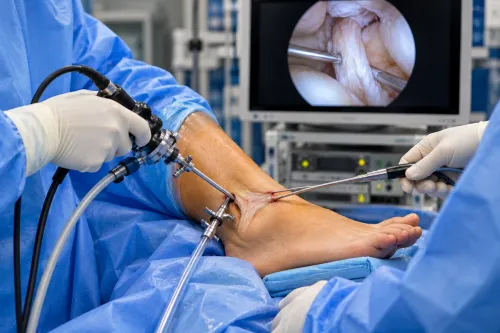
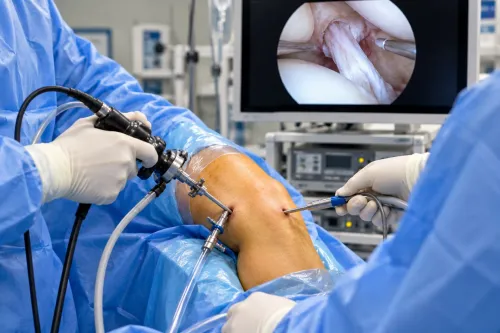
Knee Arthroscopy It is a procedure in which an orthopaedic surgeon uses a small piece of equipment called an arthroscope to investigate, evaluate and treat knee... View service → |
Frequently asked questions
When is physiotherapy preferable to knee arthroscopy?
Physiotherapy is usually the starting option for front-of-knee pain, tendinopathy, mild sprains, muscle weakness, and movement-control problems. Treatment focuses on quadriceps and hip strength, joint motion, and load management.
When might knee arthroscopy or reconstruction be more appropriate?
Surgery deserves consideration when the knee is mechanically blocked, repeatedly unstable, or has an injury such as a repairable meniscus tear or ligament rupture. A surgeon must confirm the cause through examination and imaging.
How do examination and imaging guide the choice?
The clinician checks your range of motion, swelling, strength, alignment, stability, and tenderness. X-rays assess bone and joint space, while MRI can show menisci, ligaments, cartilage, and other soft tissues.
What should you ask before choosing knee treatment in Mumbai?
Ask for the specific diagnosis, the purpose of each test, physiotherapy alternatives, expected recovery time, surgical risks, rehabilitation requirements, and what happens if you delay treatment.
Related services
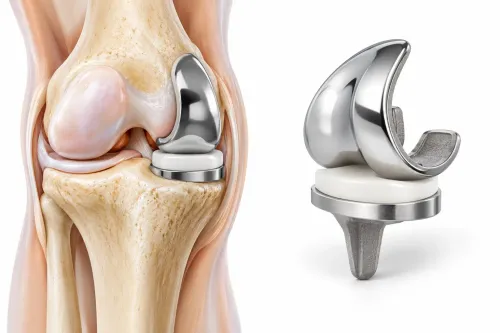
Total Knee Replacement (TKR) — also called Total Knee Arthroplasty — is a surgical procedure in which the entire knee joint is replaced with artificial components... View service → |
Arthroscopic Surgery Arthroscopic Surgery is a minimally invasive surgical procedure used by orthopedic surgeons to diagnose and treat joint problems. View service → |
Hip Surgery 🦴 What Is Hip Surgery? Hip surgery refers to procedures aimed at relieving pain, improving function, and repairing or replacing damaged structures... View service → |
Partial Knee Replacement (also known as unicompartmental knee replacement) is a surgical procedure that replaces only the damaged part of the knee joint, rather than the... View service → |
Keywords