A knee that gives way after an ACL tear needs more than repeated rest or an MRI report. You will learn how to recognise instability, when symptoms need urgent care, how clinicians choose between rehabilitation and reconstruction, and what to ask during an ACL surgery consultation.
Key takeaways
- Seek urgent care for a locked knee, severe swelling, or inability to bear weight.
- Ask for examination and imaging to identify meniscus, cartilage, or ligament damage.
- Choose rehabilitation or ACL reconstruction based on instability, injuries, and activity goals.
- Plan rehabilitation around Mumbai travel, work, physiotherapy, and follow-up visits.
Recognise ongoing instability and know when to seek urgent care
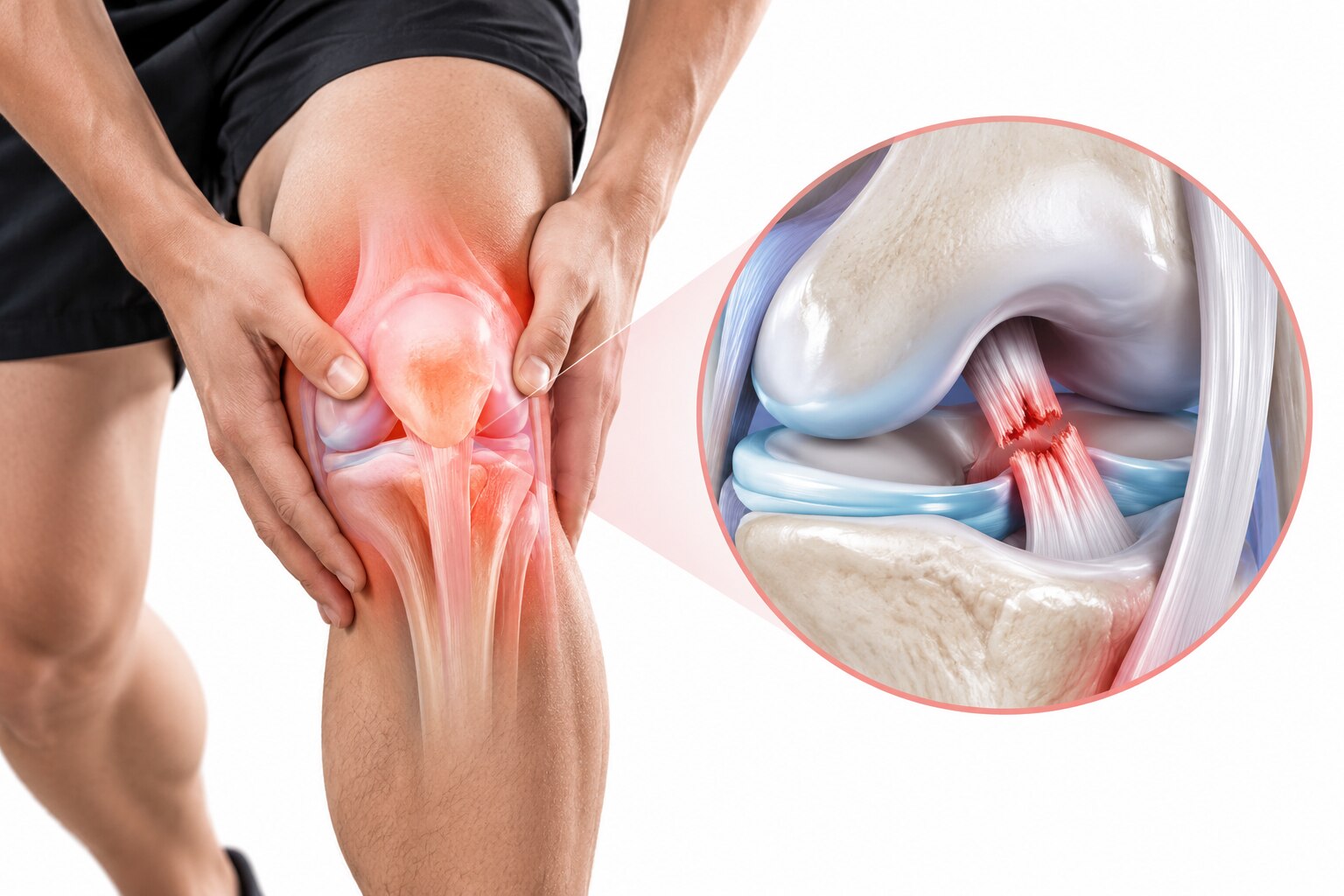
Pain and stiffness can follow an ACL injury, but instability feels different: the knee shifts or gives way on stairs, while turning, cutting, landing or walking on uneven ground. Recurrent swelling, inability to fully straighten the knee and reduced confidence in the leg point to persistent knee instability after ACL tear, not ordinary post-injury soreness.
Stop pivoting sports and avoid repeatedly testing the knee to see whether it will buckle. Use temporary activity modification, such as level-ground walking, a support if prescribed and exercises that do not trigger giving way; then arrange an orthopaedic assessment.
For anyone asking what to do for ACL tear knee problems in Mumbai, do not wait for routine care if any warning sign below appears:
- A locked knee or inability to bear weight
- A hot joint, rapidly increasing swelling or fever
- Wound discharge after surgery
- New calf swelling, chest pain or breathlessness
- Numbness, a new injury or sudden worsening
A clinician should assess the injury history, knee motion and stability rather than rely on symptoms alone. Lachman and pivot-shift tests, comparison with the opposite knee, and checks of the menisci, cartilage, other ligaments and alignment help identify the cause. MRI can reveal associated damage, but it does not replace examination.
Find out what is actually causing the continuing knee problem
Continuing symptoms need an orthopaedic assessment, not a decision based on MRI wording alone. Your clinician reviews how the injury happened, previous treatment or reconstruction, episodes of giving way and current activities, then compares both knees. The examination includes Lachman and pivot-shift tests, range of motion, limb alignment, menisci, cartilage and the other ligaments.
| Type | What it means |
|---|---|
| Partial tear | Some ACL fibres remain, but stability depends on examination and symptoms. |
| Complete tear | The ligament is fully disrupted and may allow abnormal forward or rotational movement. |
| Stretched or nonfunctional ACL | Fibres may be present but no longer provide useful stability. |
| Failed or recurrent tear | A reconstructed graft has torn again or is not functioning after surgery. |
MRI can show meniscus damage, cartilage injury, bone bruising, other ligament damage and the condition of an ACL graft. After reconstruction, imaging also helps assess tunnel position or widening, while the examination checks whether the graft is mechanically effective; symptoms alone cannot plan revision surgery.
The plan for ACL tear treatment in Mumbai depends on the findings, not the scan label. Age, activity goals, previous treatment, associated injuries, alignment and willingness to complete rehabilitation all matter. A stable partial tear in someone avoiding pivoting sports differs from recurrent knee instability after an ACL tear with a meniscus injury.
That distinction determines whether structured rehabilitation, reconstruction or staged revision deserves discussion.
Choose between structured rehabilitation and ACL reconstruction
Not every ACL tear requires reconstruction. A stable knee, lower pivoting-sport demands and no major associated injury can make supervised nonoperative care reasonable.
| Option | What it involves | When it fits |
|---|---|---|
| Structured rehabilitation | Swelling control, quadriceps and hamstring strengthening, proprioception and movement retraining, then a staged return to activity | Stable knee, lower pivoting demands and no major associated injury |
| ACL reconstruction | Replacing the torn ligament, followed by progressive rehabilitation | Repeated giving-way, high-demand pivoting sport, a repairable meniscus at risk, or instability despite rehabilitation |
Repeated giving-way on stairs, turns, uneven ground or landings exposes the meniscus and cartilage to further injury. Reconstruction becomes more likely when you want to return to football, badminton, basketball or similar pivoting sports, or when the knee remains unstable after a properly supervised programme.
Before surgery, prehabilitation should restore full extension and flexion, reduce swelling and reactivate the quadriceps. A markedly swollen or stiff knee is not a target for rushed surgery; limited extension needs correction or explanation first.
When reconstruction is indicated, earlier surgery can reduce the time an unstable knee is exposed to additional meniscal or cartilage damage. Timing remains individual.
For ACL tear treatment in Mumbai, ask how rehabilitation will be supervised and how follow-up will continue; searching for acl reconstruction in mumbai should not mean choosing surgery from the procedure name alone.
Make an ACL reconstruction decision that fits your life in Mumbai
Judge the whole treatment pathway, not just whether a hospital offers keyhole surgery. An ACL surgery consultation should cover associated meniscal, cartilage and other-ligament injuries, non-operative options, anaesthetic and clot risks, work and sport timelines, and the plan if instability continues.
Ask:
- Can the surgeon assess and treat meniscal, cartilage and other-ligament damage?
- Is a repairable meniscus being preserved rather than trimmed, and would repair require limited weight-bearing, reduced bending or slower rehabilitation?
- Which graft is proposed, why, and what donor-site symptoms are likely?
- How easily can you reach supervised rehabilitation in Mumbai and attend follow-up for several months?
- What is the alternative if reconstruction is unsuitable or the knee keeps giving way?
| Graft | Main advantage | Main trade-off |
|---|---|---|
| Patellar-tendon autograft | Strong fixation and extensive evidence | Front-knee or kneeling pain |
| Hamstring autograft | Less kneeling discomfort | Hamstring weakness and slower strength recovery |
| Quadriceps-tendon autograft | Thick graft with less kneeling-site disruption | Quadriceps weakness or harvest-site pain |
Autograft uses your own tissue and is generally favoured over allograft in young or active patients because allografts fail more often in that group. The choice still depends on sport, occupation, previous surgery and knee findings.
Rehabilitation access matters as much as the operation. Expect recovery to affect work for weeks and pivoting sport for months, with exact timing set by strength and healing. Dr. Sujit Korday- Orthopaedic Surgeon can provide a local assessment linking diagnosis, graft and rehabilitation planning; reconstruction does not suit every patient.
Related services
ACL Reconstruction Surgery Anterior Cruciate Ligament surgery, also known as ACL surgery, is a procedure that involves the repair or reconstruction of the anterior cruciate... View service → |
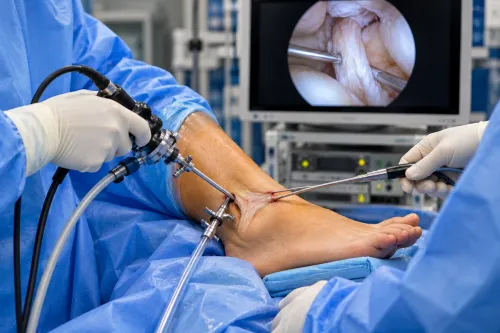
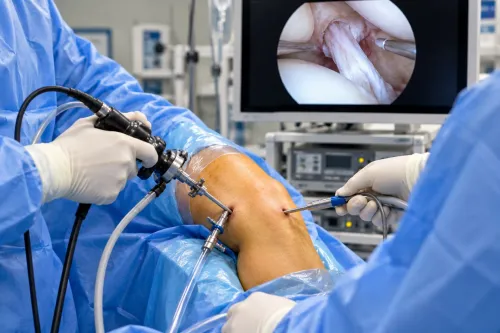
Arthroscopic Surgery Arthroscopic Surgery is a minimally invasive surgical procedure used by orthopedic surgeons to diagnose and treat joint problems. View service → |
Treat rehabilitation and recurrent symptoms as part of the outcome
Rehabilitation after reconstruction is the treatment plan, not an optional add-on. Begin by controlling swelling and restoring full extension and flexion; then rebuild quadriceps and hamstring strength, balance and movement control. Running comes later, followed by hopping and sport-specific cutting, landing and pivoting drills.
Return to pivoting sport is measured in months, not weeks. Many protocols use roughly 9–12 months as a broad timeframe, not a clearance date. Before returning, you need no effusion, full motion, adequate strength and acceptable hop performance.
Knee instability after an ACL tear, or after reconstruction, warrants reassessment when you have:
- Persistent swelling
- Locking
- Loss of extension
- Recurrent giving way
Reconstruction restores an important stabilising ligament but does not guarantee a normal knee or prevent arthritis. Ongoing symptoms can reflect graft failure, a new injury, meniscal or cartilage disease, infection or stiffness.
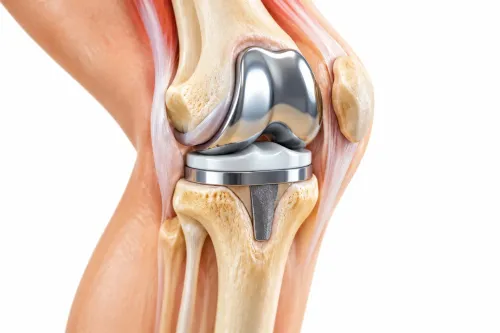
An ACL surgery consultation for recurrent instability should review the original operation and injury, graft condition, tunnel position and widening, alignment, infection and associated damage. MRI and examination guide the decision; a revision may require staged surgery when tunnels are misplaced or widened, infection is present, or associated damage needs separate treatment.
Frequently asked questions
When should I seek urgent care for knee instability after an ACL tear?
Seek urgent care for a locked knee, severe or rapidly increasing swelling, inability to bear weight, a cold or numb foot, or calf swelling and breathlessness.
How can doctors find the cause of continuing knee problems after an ACL tear?
An orthopaedic assessment checks alignment, movement, ligament stability, strength, and walking. X-rays and MRI can identify associated meniscus, cartilage, bone, or ligament injuries.
When is ACL reconstruction preferable to structured rehabilitation?
Rehabilitation can suit people with manageable symptoms and stable daily function. Reconstruction deserves discussion when the knee repeatedly gives way, associated injuries need treatment, or your activities require pivoting and cutting.
How should I plan ACL reconstruction and rehabilitation in Mumbai?
Plan time for preoperative strengthening, surgery, supervised physiotherapy, transport support, wound checks, and follow-up. Discuss return-to-work and sport milestones with your surgeon.
Related service
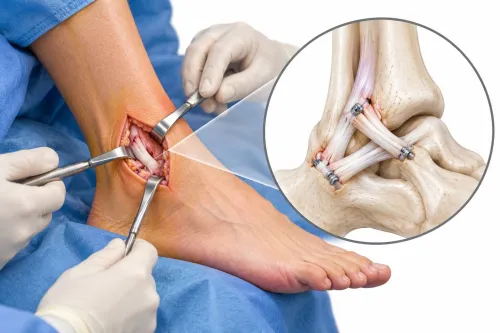
Ankle ligaments reconstruction or repair Ankle ligaments reconstruction or repair Ankle ligament reconstruction or repair is a surgical procedure performed if the joint still feels unstable after a fracture. View service → |
Keywords