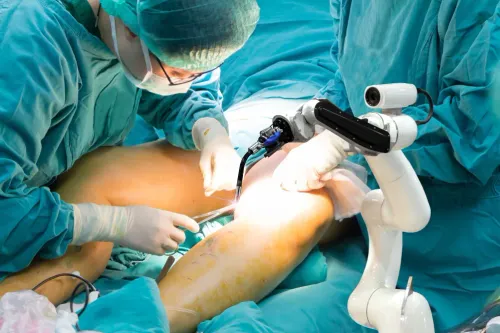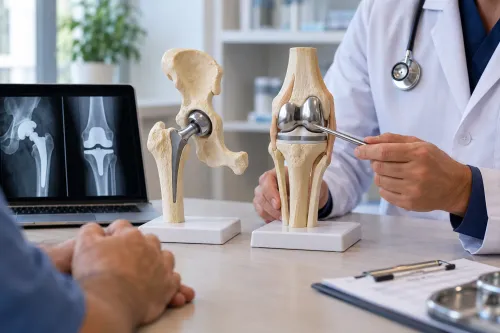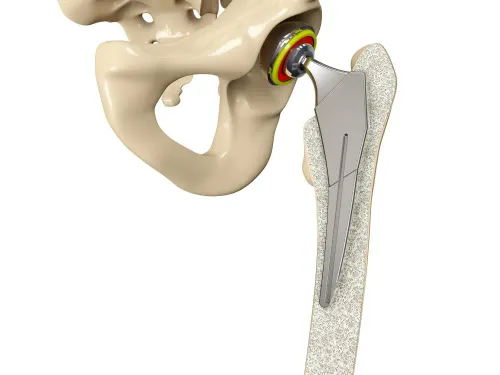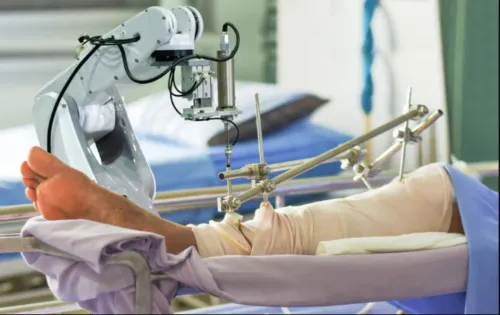

Knee arthritis does not always affect the entire joint. Some patients develop significant cartilage damage mainly within one compartment while other parts of the knee remain relatively preserved. In selected cases, Partial Knee Replacement may be considered instead of replacing the whole knee.
The procedure is also known as unicompartmental knee replacement when a single knee compartment is treated.
Understanding the Knee Compartments
The knee can broadly be divided into three compartments the medial compartment on the inner side, the lateral compartment on the outer side, plus the patellofemoral compartment around the kneecap.
Arthritis may affect one compartment more severely than the others.
When damage is genuinely isolated, replacing only the affected portion can sometimes preserve more of the patient's natural joint structures.
Who May Be Considered for Partial Knee Replacement?
Patient selection is particularly important.
A surgeon usually considers symptoms, X-rays, ligament stability, knee movement, location of arthritis, deformity, plus activity requirements.
Possible suitability factors can include
- Arthritis concentrated mainly within one compartment
- Pain corresponding to the damaged area
- Reasonably preserved cartilage elsewhere
- Appropriate ligament function
- Correctable deformity
- Adequate knee movement
These are general considerations rather than fixed eligibility rules.
Why Not Simply Replace the Entire Knee?
Total Knee Replacement treats more extensive arthritis across the knee. If only one compartment is significantly damaged, replacing unaffected areas may not always be necessary.
Partial replacement aims to resurface the diseased compartment while preserving more natural bone plus soft tissues.
Potential advantages for appropriately selected patients may include preservation of healthy structures plus a knee that retains more of its native anatomy.
However, these potential benefits depend heavily on correct patient selection.
When Partial Replacement May Not Be Appropriate
The procedure may be unsuitable when arthritis affects multiple compartments or when other structural problems compromise the knee.
Examples can include extensive cartilage loss elsewhere, certain ligament deficiencies, substantial uncorrectable deformity, inflammatory joint disease, or other anatomical factors.
This is why symptoms alone cannot determine eligibility.
Weight-bearing X-rays plus clinical examination are often important when deciding whether the disease is genuinely limited to one compartment.
What About Younger Active Patients?
Age alone does not determine whether someone should undergo partial or total knee replacement.
The decision is based more broadly on arthritis distribution, symptoms, function, anatomy, expectations, plus general health.
Active patients should discuss what activities they hope to return to after surgery. Replacement surgery is intended to improve function, but artificial joint surfaces still need appropriate long-term care.
Recovery After Partial Knee Replacement
Rehabilitation usually begins soon after surgery according to the surgeon's protocol.
Early goals typically include safe walking, controlling swelling, regaining knee movement, plus activating the muscles surrounding the joint.
As recovery progresses, exercises may focus on strength, balance, walking pattern, plus routine activities.
Individual recovery varies, so patients should avoid comparing their progress too closely with someone else's timeline.
The Importance of Confirming the Pain Source
Not every painful knee with an abnormal X-ray needs replacement. Meniscal injuries, ligament problems, hip disorders, spine conditions, plus soft-tissue problems can also contribute to knee symptoms.
A complete assessment is therefore important before surgery is considered.
For people exploring partial knee replacement in Santacruz, Maharashtra, Dr. Sujit Korday can evaluate whether arthritis is isolated enough for a partial procedure or whether another treatment strategy is more appropriate.
The central question is not whether partial replacement sounds less extensive. It is whether the pattern of arthritis, knee stability, anatomy, plus symptoms make the procedure suitable for that individual patient.
Keywords